
The Sumner Files: Sumner interviews Milton Resnick, Part 1
With Rudolph Grey and Duncan Lindsay, Sumner sits down for a conversation with his former mentor, abstract expressionist Milton Resnick, in 1980.

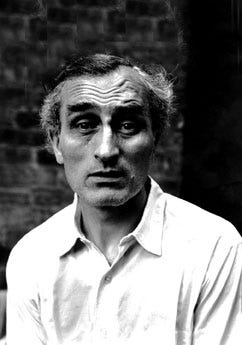
This week’s post is again an audio podcast episode, which you can find here, on the podcast site. But this time it’s a tape from the archive, the first of three interviews Sumner, along with his friends and collaborators Rudolph Grey and Duncan Lindsay, conducted with Milton Resnick. The remainder of this post is the text of my introduction to the episode. That is, you’ll hear me say these same words before you hear the interview, but you can also read it here to get an idea of the content and context first. I may publish a transcript of the interview itself later, but the AI version I have needs some cleaning up, and that will have to wait, so for now listening is the only way to consume it. But I recommend that anyway, as the voices convey a sense of the personalities, including Sumner’s as well as Resnick’s and the others, that the words alone don’t.
This episode of The Sumner Files is not an interview I conducted, but rather one Sumner himself did. The subject of the interview was the famous abstract expressionist painter, and his former teacher, Milton Resnick.
For some period of time, beginning sometime around 1965 when he was around 19, Sumner studied at the New York Studio School. The studio school had opened in 1964, at the initiative of a group of students from other art schools who were frustrated with the emphasis on classroom learning over actually practicing their art. Sumner was either in that first group of students, or one shortly after that. Anyway at the studio school, the teacher who influenced him by far the most strongly was Milton Resnick.
Resnick is a truly important 20th century painter. He’s not quite as well known as Jackson Pollock or Willem DeKooning, for example, but he was in their same circles and on their level. Resnick’s work has been shown in countless museums and galleries, including the Museum of Modern Art for example. It is perpetually shown in the lower Manhattan gallery run by the foundation named for Resnick and his wife, painter Pat Passlof, the Milton Resnick Pat Passlof Foundation, in the converted synagogue where Resnick lived in his later years in downtown Manhattan.
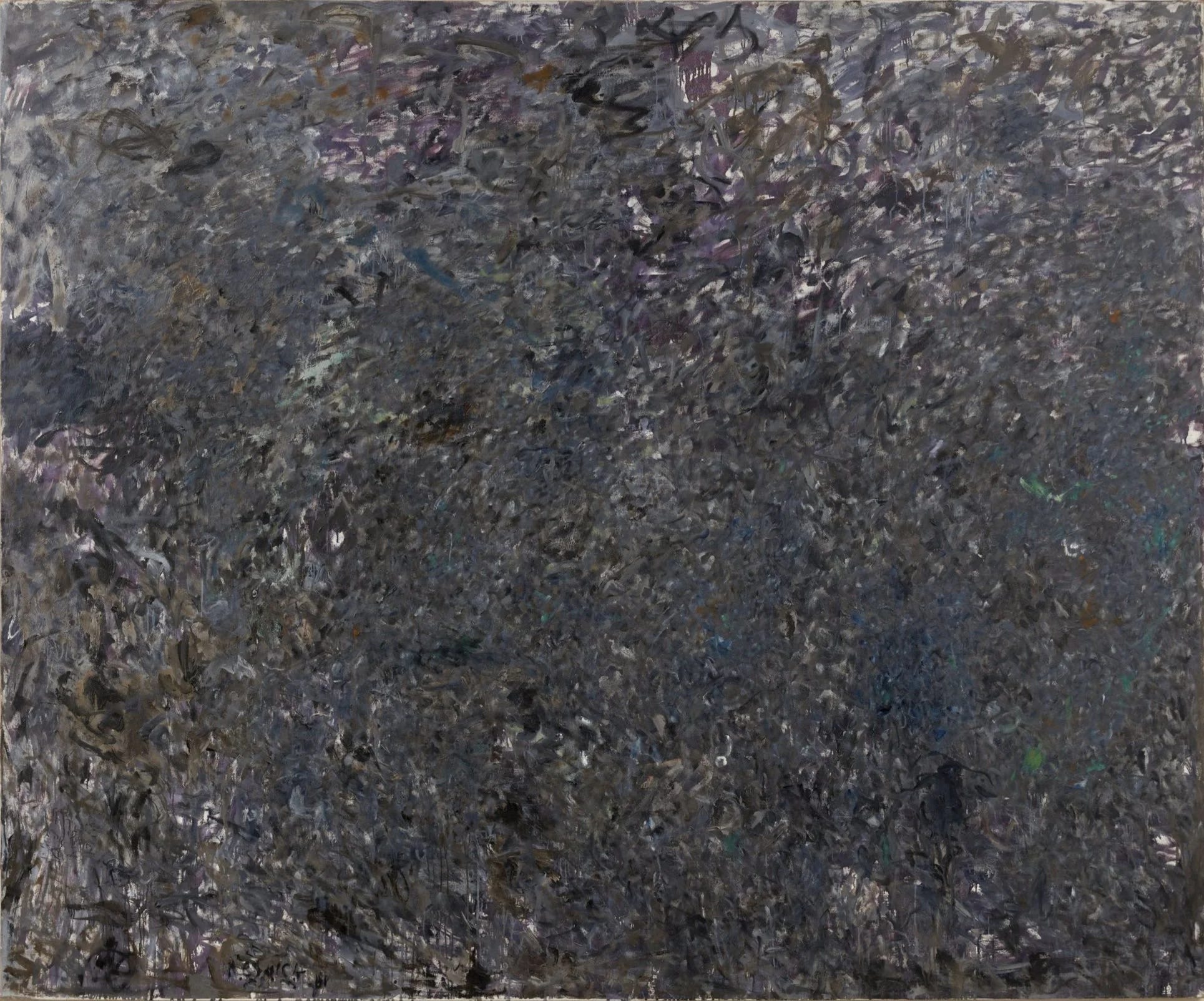
Sumner painted figuratively before studying with Resnick, and then eventually again after, but Resnick influenced him so strongly that for about years he painted abstractly, somewhat like Resnick, large canvases thick with many layers of paint. I grew up looking at these paintings by Sumner, though I didn’t know who Resnick was.
In the late 1970s and early 1980s, during and after the Mars years, Sumner conducted interviews with a number of other artists and musicians he knew. I hadn’t known this until I started this project, and it was quite amazing for me to learn it since my project itself grew out of my own practice of interviewing my colleagues for this podcast.
Anyway, he interviewed Resnick three times, in 1980 and 1981. While some of Sumner’s earlier interviews were published in the short-lived No Wave publication Vacation Magazine, I don’t believe these Resnick interviews were ever published or released in any form, as they were done after Vacation magazine stopped publication.
These interviews were in fact conducted not just by Sumner, but by a trio of interviewers including also his friends Rudolph Grey and Duncan Lindsay.
Rudolph was Sumner’s best friend and collaborator in the Jack Texas trio, along with Arto Lindsay. Rudolph is also a musician, having been in the no wave band Red Transistor, and then his own bands, at the boundary of no wave and free jazz, under the name Blue Humans; later, Rudolph would write the book about Ed Wood that would be adapted to the Hollywood movie starring Johnny Depp. Duncan is Arto’s brother, and also a friend and collaborator of Sumner’s, having played, along with Arto, on a track on Sumner’s opera John Gavanti and with Sumner and Ikue Mori on at least one tape of unreleased blues that we still have in the archive.
Sumner, however, was the one who had the pre-existing relationship with Resnick, and who must have set this up. That he invited Rudolph and Duncan to do it with him is typical of Sumner, that he wanted just about everything to be a collaboration with his friends.
In the conversation, it’s Sumner’s voice you hear the most, after Resnick’s of course. But you do hear the others too, and this really does become a four-person conversation at times. To help you identify them, Rudolph’s is the deepest baritone, while Duncan has the slight hint of a southern accent.
I think it’s quite significant that these interviews were conducted more than 15 years after Sumner first studied with Resnick at the Studio School. I have said in the past that, although Sumner was a brilliant and deeply well-read auto-didact, he had little formal education, having dropped out of high school. These interviews, however, show something different. Besides having attended the Studio School — a nontraditional school that didn’t offer degrees — it’s clear from these that Sumner had a long-term relationship with Resnick, one that reminds me more than anything of the kinds of relationships that academics often have with their former Ph.D. advisors. That speaks to the depth of Resnick’s mentorship of Sumner, and that itself is a profound form of education.
One more thing. While Resnick does by far most of the talking (and he tends to interrupt Sumner and the others and talk over them, which I find a little aggravating), I value these interviews greatly because we do hear quite a bit of Sumner’s voice too. In fact we hear more of him here than in any other existing recording I’m aware of, at least from this period.
To me, Sumner’s personality was expressed so much through his speech — his intensity, his sense of humor and slightly crazy-sounding laugh, his Queens accent — that these documents have great value. If you want to understand Sumner, it’s a big help to hear him speak.
Without going into too much detail, here’s a brief, selective, and Sumner-centric summary of the topics you’ll hear about.
The conversation starts with Resnick’s account of his recent experience teaching at the artist residency in Skowhegan, Maine, where he ran out of paint.
This eventually leads to a lively four-way discussion of what it means to be an artist, in history from ancient Greece to now.
Then there’s a story about Arshile Gorky and Willem De Kooning, referred to as “Bill”, having an argument about the relationship of drawing and illustration to “great art”, in which Resnick eventually refers to his falling out with De Kooning and the end of their friendship.
There’s a discussion about the role of critics in art. I found this interesting because Sumner defends critics against Resnick’s more negative view of them.
About an hour in, Sumner changes the subject by asking Resnick about his experiences as a soldier in World War II. Resnick says he doesn’t want to talk about it, but then he does, a little.
There’s a discussion about the painter Max Schnitzler and his influence on Jackson Pollock. Schnitzler, a much lesser known painter, apparently was angry that Pollock had been influenced by him, to the point of feeling that Pollock had stolen from him. Sumner defends Pollock, saying we all influence each other; he asks “what are you supposed to do, cut yourself off” (from the experiences we have of others’ work)? I found this particularly interesting, since Sumner’s own influences were so important to him, and worn so prominently on his sleeve.
This interview was conducted on February 20, 1980, according to the writing on Sumner’s cassette, making it the first of the three that we have. I haven’t edited it at all, so bear with the clicks and starts and stops at the beginning. The first voice you hear is Sumner’s, to get you oriented.
I’ve said enough. Here is Milton Resnick, interviewed by Sumner Crane, Rudolph Grey, and Duncan Lindsay.